Showing posts with label audio codes. Show all posts

16/11/2013

Scripts and their Interpretation Part 1

Sound is one of the most basic essentials that a modern film production should have. If screenplay writers wish to include dialogue and sound effects into their production, it is essential that they should produce a script. This is because it allows actors involved in the production to confidently express the characters that are in the film. The camera crew can rely on the script when it comes to producing the shots for a particular scene or section and the sound crew can successfully insert sounds because of cues from the script.
 
In this task, I analysed the script for the opening scene from the 2012 film adaptation of the Schonberg-Boubil musical Les Miserables that stars Hugh Jackman as Jean Valjean and Russell Crowe as Javert. I was able to complete the task by reading the manuscript then analysing how that section of the script was interpreted on screen.
 
Questions:
 
1) How does the script introduce the narrative, setting, time period, the characters and the genre?
 
A) In the superimpose caption, the script introduces the year, the country that the film is set in and the film's historical context in full sentences.  Even though they are full sentences, they are simple sentences. The length of the sentences allow the audience to easily remember these important facts. This allows the audience to have a clear understanding of the film that they are about to watch before any shots or screenplay have actually taken place. It says, 'The year is 1815. The French Revolution is a distant memory. Napoleon has been defeated. France is ruled by a king again.'
 
In A1's screen direction, not only is the actual location of the film's opening scene introduced (Ahead, the port of Toulon, the home of the French navy) but the setting and the atmosphere that the setting creates is also introduced to the audience. When a person thinks of 'Winter rain', they immediately think that it is dark and miserable. Some could say that this dark and miserable theme could continue throughout the film. It could also be an enigma code for events to come. Another superimpose caption that says the film's setting was written for it to appear onscreen during the film. This tells  audience members, who are unfamiliar with the theatre adaptation or with landmarks of France, that the opening sequence is set in a particular place in France.
 
 In the first shot's caption, the character, Jean Valjean, is described as being 'a great brute of a man' but 'he seems to feel nothing'. This is an enigma code because it makes us wonder why he feels nothing and so numb despite being incredibly strong and brutish. The fact that the shot focuses on Valjean's characteristics unlike all the other convicts suggests to the audience that he is either a main character or a character of significant importance to the film's events.
 
The second shot's caption directs the convict ensemble to sing their lines when it says, 'The convicts sing in time with the rhythmic pulls on the rope -'. This lets the audience know that the genre of the film is a musical. This caption also introduces the character, Javert, as being 'the officer in charge of the convict workforce' which shows the audience that there is a class and power divide between him and the other characters. It also says that he is 'expressionless' which shows that he is certainly not showing any remorse or guilt for the pain that the convicts are undertaking. This suggests that he must be the bad character or the villain of this film.
 
In the third caption, the relationship between Javert and Valjean appears strained and almost non-existent when it says Valjean 'stares back for a beat, defying him'. This suggests to the audience that the conflict of power between the two characters could escalate further as the film progresses. This suggestion could be classed as a part of the film's narrative.
 
2. How does it engage you?
 
A) It engages me by giving full descriptions of shots. This allows me to create an image of that shot in my head and this makes me, as an audience member, feel more involved and more connected to the film. The script's writer has also been careful not to go into too much depth when it comes to describing the characters. This engages me because the vague information makes me question why those characters are like that and it makes me wonder if those questions will be answered during the film's progression. Key characteristics have been mentioned rather than a whole list of personality traits. This engages me because it does not over-complicate the character and it allows the actor to create a realistic, respectful representation of that character.
 
3. How did the film-clip introduce the narrative (story), setting, time period, the characters and the genre?
 
 
In the first few seconds of the clip, the year, the country and the historical context is introduced. The year of the film is larger than the rest of the text. This suggests that this detail out of the whole passage is the most important. If audience members are unsure why that date is significant, the first half of the passage explains why (twenty six years after the start of the French revolution). The audience are able to know the film's setting from the remainder of the passage which says 'a king is once again on the throne of France'. Non-diegetic fanfare music can be heard at this point. The genre and the aggressive tone of music suggests that the following shots in the sequence are going to express that aggression at some degree. The consistent dark colour scheme creates a miserable, dark atmosphere which suggests that the film's narrative could be just as dark and mysterious.
 
 
The camera then rolls from the ship onto the docks. This shot could be called the opening sequence's establishing shot because it introduces the location of this first scene to the audience. Although it is not clear what is the name of this particular place, the audience are able to identify it as being a war-ship docks because of the size of the ships that are on the left hand side and on the right hand side of the camera's position.
 
 
A high-angle shot then zooms in from the ship to the cast who are pulling the ship into the docks. The shot particularly focuses on Hugh Jackman. Fans of the original musical adaptation will recognise this character as being Jean Valjean. However, other audience members may not realise this yet and may question if his character has significant importance because the camera is focusing on him. His shabby costume suggests that his character could be quite poor but then the shackles around his neck confirms that he looks dishevelled because he is a convict.
 
 
A few seconds later, this next low-angle shot zooms to a medium close-up of Russell Crowe. Once again, fans of the original musical adaptation will be able to identify his character as being Javert, the officer in charge of this particular group of convicts. For those who do not know the musical, the low-angle shot is often used for characters who are menacing or have a high degree of power and status. This degree of power, alongside the much tidier costume that he is wearing, suggests to audience members (who don't know who he is) that he is the leader or dictator. The menacing mood and low eye contact suggests that he could be a bad character or a villain.
 
After this shot, the camera cross-cuts to a close-up of Valjean struggling to pull the rope back. Whilst doing this, he sings the line, 'Look down!'. By singing the dialogue, this tells the audience that this film is a musical. The line 'Don't look him in the eye' is addressed to Javert. The tone of this lyric proves that the rest of the characters in this sequence have a strained relationship with the officer because of conflict in power.
 
 
This low-angle shot of the convicts walking allows the audience a clear view of the horrible conditions that the men have to work in. This shot is also very interesting because it depicts the convicts walking over their country's flag without a care in the world. This is an enigma code for the film's narrative because it suggests that the people of France are living under such regime where they are physically unable to be patriotic and love their homeland anymore. This also suggests that at some point in the film, the cast could show defiance and stand up against the French regime in vengeance for the pain that they had endured.
 
 
This medium shot of the two characters together establishes their strained relationship for the audience. The difference in costume shows that there is a clear divide in power and respect. Valjean's back is facing the camera. This body language shows that he does not wish or choose to associate with Javert.
 
4) How did it engage you?
 
It engages me because one clear interpretation of the script has been created. Whilst the script was full of enigma codes that caused me to ask questions, the film's sequence explored these enigma codes in a way that was not directly addressed to me as an audience member. Elements of the photography created these enigma codes such as the interaction between the two main characters and symbols that signified possible plot elements. The audio codes also engages me because it allows me to understand and connect with the characters on an emotional scale.


21/10/2013

EXTRACT QUESTION - GENRE ANALYSIS

Q) ANALYSE THE EXTRACT COMMENTING ON THE FOLLOWING:
  • VISUAL CODES
  • TECHNICAL & AUDIO CODES
  • GENRE
______________________________________________________________________________________
 
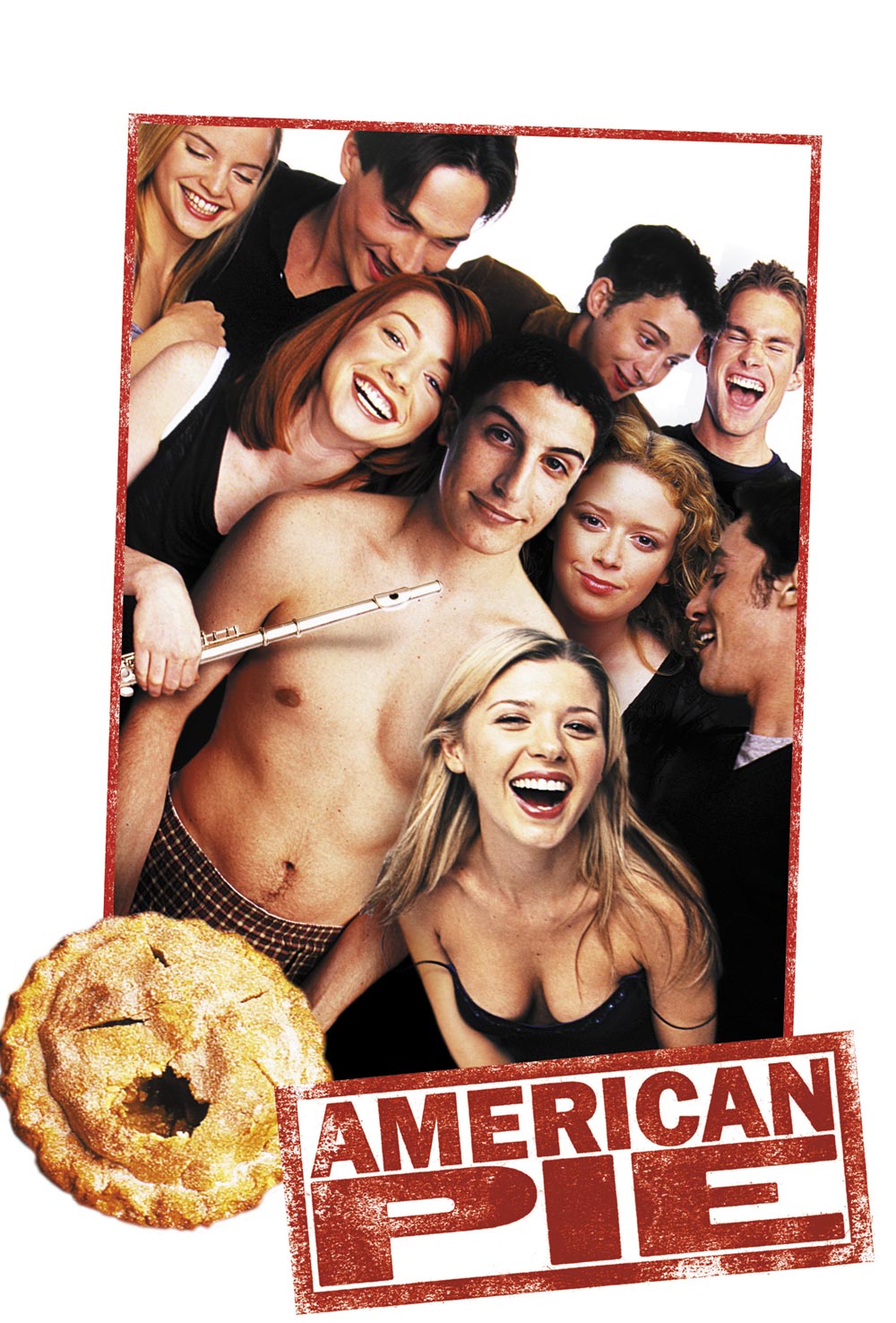
A) The extract is the opening scene from the 1999 movie American Pie. In this short, two minute extract we see the main character, Jim, tending to his manly needs when his mother and father awkwardly walk into his room and discover what he is doing in his room.
 
American Pie (1999) Movie Poster

Halfway through the beginning of the studios credit roll, the audience hears a bass guitar riff which immediately creates a more sexual rather than romantic atmosphere. This tells us that the film's romance is based on vulgar themes rather than the illiterate love scenes you tend to see in films of the romance genre. Therefore, this tells us that there is going to be an element of humour within this film. After a few seconds of the bass riff, moaning can be heard from a female. The tone of her moaning adds to the sexual atmosphere. This combination forms a sound-bridge that flows into the next sequence where there is an establishing shot of a messy bedroom floor.
 
From the establishing shot, we learn that the bedroom belongs to a male character because on the floor are a pair of blue trainers alongside a black gym bag. The trainers also confirm that the character must be of a younger age (younger than 30). At this point, the beginning of the title credits appear on the screen. As the typography has an informal, white font, this confirms that the film has a relaxed setting and does not have a lot of formal, serious content. A sequence shot of the messy floor shows the audience more clothing that has presumably been taken off and thrown on the floor. The camera rolls from the trainers, up the wooden bed post, across a naked leg and then onto a medium-close up of the lead character's facial expression. The expression depicts pleasure meaning that he is obviously enjoying something that is occurring in the background. When related back to the sound-bridge in the studio credit and the lack of lower body costume, this means that the pleasure must be because of sex. As he is on his own in his bedroom, this confirms that he is not actually participating in intercourse. When the camera reaches the medium-close-up of Jim (the character in this sequence), the title credits stop to allow the acting in the background to be the focal point of the sequence.
 
There are a series of cuts to and from the TV, the camera ensuring that Jim's eye-line matches the TV screen. The TV is showing a poor, hazy representation of a porn film. This signifies where the location of the sound-bridge originates from and concludes that Jim is in his room gaining self-pleasure from the video cassette. The poor video reception and the TV represents the film's period: it must have been set at a time when video cassettes were still in fashion so the film must have been set during the 1980s or 1990s (at the time of release, present day). From this point, the camera cross-cuts to and from Jim and the TV screen with the camera maintaining a medium-close-up range during cuts of Jim's facial expression to allow the audience to see his reaction to the porn film.
 
When it comes to diegetic dialogue from the porn film, emphasis has been made on particular phrases to allow fluency in scenes and to add to the sequence's humour. The first notable phrase that the female character says is 'Oh, you're so big'. Whilst maintaining a medium-close-up shot of Jim's facial expression, he lifts up his sock for camera view. An extreme-close up shot of the sock was probably not used because this would have made the scene too cheesy and cheap. There is then a cut to the TV as a male character begins to talk to the female. This annoys Jim and this fury is seen through the facial expression and the annoyed tone in his voice as he speaks bitterly towards the screen when he says, 'Man just shut up!'.
 
From this point on, the number of cuts increases to manipulate the pace. As an audience member, we feel Jim's anxiety as a long-shot cut of Jim's bedroom shows that an older female character has entered the room. Between this cut and the cut where Jim expresses his anger at the TV, there is a sound-bridge of a female character saying, 'Hey Jimmy'. This is the first time the lead character's name is said and this is a brief introduction of his character to the audience. In this series of cuts, the camera constantly returns to the medium-close up shot of Jim to relate back to his reaction and his anxiety of wanting to cover up his embarrassing act. Even when talking to the other lead character, his eye contact remains focussed on the TV screen. This is evident when he quickly says, 'Yeah sweet dreams, night mom'. This address confirms that the other character in the room is actually his mother. Audience members can relate to this cut because they can understand how humiliating it is for a parent to walk in on something awkward such as  an explicit movie.
 
A few seconds later, the female character on the TV exclaims which triggers an extreme-close up shot of the TV remote. This quickly cuts to an medium shot of Jim's mother's confused facial expression. When Jim tries to explain what's 'wrong with the reception', there is a cross-cut between a medium close up of Jim's eye line matching his mother's and the big close-up of the TV screen when what is occurring on the TV adds to the irony of Jim's explanatory speech. This section cuts back a medium shot of the mother shaking her head suspiciously and turning around to exit his room. Just as she is about to leave the room, there is a exclamation of 'Yes' from the TV and Jim's shocked facial expression which leads to him frantically fidgeting with the TV remote (the remote is displayed with an extreme close-up to show the prop's importance in this scene). There is a long shot of the mother hanging onto the door-knob as she continues to examine the programme with intrigue, throwing herself back slightly when the female character on the TV cries, 'Ride me like a pony'. This adds irony to the situation because Jim originally explains that the programme he's watching is a nature programme and the phrase said by the adult actress refers to sex.
 
This cuts to a long shot of the bedroom when the mother steps closer towards the TV and Jim's physicality suddenly becomes frantic. The closer the mother is to the TV, the more horrified her facial expression becomes. The diegetic sound from the TV causes the father in the background to enter the room curiously. When he first speaks to his son, a medium close-up of Jim shows that he is even more nervous now that his dad has entered the room. The audience knows that the older male character is his dad because his first line addresses Jim as his son. When the father joins the mother's side, it cuts to a long shot to allow the audience to observe the mother's reaction.
 
During the father's justification of events, the male character on the TV says, 'Just like my hairy ass'. This causes the father's eye-line to match that of the TV and to ask, 'What was that'. This is another example where the volume of the dialogue on the TV increases to allow the audience to hear what is being said. This adds to the humour of the scene. Then, there is an extreme close-up shot as the father removes the pillow from Jim's crotch to reveal the erect sock. There is a long shot of the bedroom to allow the audience to see the father's stunned facial expression and the mother's turn away in disgust before the camera returns to an extreme-close up of Jim's attempts to cover up the erection with the pillow. There is a medium-close up of Jim's sweaty, embarrassed facial expression when humour is created because of his extremely red face. There is another medium shot then to show the father's panicky tapping of the remote to try and pause the programme. His panicky response adds to the scene's humour as the scene reaches its climax.
 
The sequence concludes with a medium close up of Jim looking down and away in disgust.
 
What genre is this film?
 
From my analysis, I can conclude that this film is definitely a comedy because of the amount of gags that are included in the sequence in an attempt to create humour. However, the tone of the gags is that of a very sexual reference (almost too sexual). The main character's age range is also that of a younger, teenage audience. Therefore, this comedy must be a gross-out comedy because the humour is created through crude material.


26/09/2013

Textual Analysis - Hot Fuzz Opening Sequence


With this film from Edgar Wright being one of my favourite films (and one that I freely admit to watching beyond counting on my fingers), I decided to analyse the opening for Hot Fuzz because although the film is not necessarily a global hit, for me it has one of those openings that I can easily picture on my head.
To clarify the opening for those who haven't watched it, this is basically the perfect two minute description of Sergeant Nicholas Angel, the workaholic officer (played by Simon Pegg) who lists his accolades and achievements almost like a recital. During his extensive monologue are fast paced cuts that cross to and from the film's present time until Angel reaches the door of the Chief Inspector's office (who happens to be played by Bill Nighy, another great British actor).
Whilst the studio credits roll, the non-diegetic wailing of sirens clearly states to me that this movie involves the forces to some degree. Then, there is a long, uninterrupted shot of Pegg marching from the bottom of a reception hallway to the desk with the camera at an extra-long shot. What makes this cut seem even longer is the echoing of Pegg's boots tapping on the linoleum floor while he walks and this gradually increases in volume as he walks closer to the camera. Once he finally reaches the desk, he pulls a serious facial expression to provide his character with a bit more depth before there is an extreme close-up shot of Pegg's Police Identification Card.
 
  
To me, this is a great establishing shot because we are then able to identify not only his character's name but his occupation and the main theme that runs through this film too: the Police force or 'The Fuzz'. If viewers don't quite catch his name on the card, Pegg slowly pronounces his name with his voice becoming a voice-over for the remaining minute and a half.
 
From this point, Pegg's monologue is accompanied with a series of fast-paced flashbacks depicting in chronological order his career in the force. During this, the main non-diegetic music delivers a rock and roll feel to not only lighten the mood but to give the flashbacks almost a kind of nostalgic feel. The cuts range from close-ups of Pegg's consistent serious facial expression to centre shots of him in action whether that is in training or as a part of the police riots squad. For whatever type of shot that is used during this monologue, the camera team has made sure that Pegg remains the focus of each shot whilst they either zoom in to big close ups or zoom out to medium shots. (As if none of the other characters are relevant, when put in that way it also portrays his character with some kind of arrogance and self-absorbance). During the graduation ceremony, there is some diegetic applause and flickers of light from camera shots as Pegg is pictured slightly smiling with his graduation class (still remaining the centre of the focus line for the camera). What is also consistent though is that each brief scene starts/finishes with a graphic swipe to prevent the pace from slowing down.
 
  
There is one particular moment when Pegg quotes, 'quickly established an effectiveness and popularity within the community' and it cuts to the officer giving a lecture to a group of young convicts. The complete irony of this quote is that the group of men in the room appear less than interested in Pegg's lecture about social issues (the exact issue was not clarified in the scene). I was able to pick this up because the camera does a back shot of Pegg's body in order to face the group of men who are sat down looking bored at the level of the camera. With the room only being lit by a blue projector light, this casts a black shadow over Pegg's body so that his expression is hidden and the expressions of the men are highlighted. This is one of the cuts when a distinctive quote is said from Pegg, 'Use your brains' and this is also ironic because these group of men can't have been that conscientious in order to get into that situation that they were in in the first place.
 
A pattern that I seemed to notice in this opening sequence was that although alternating dolly shots were used, Pegg’s facial expression would often be the link for the next cut. For example, a dolly shot is used to zoom in closer to Pegg’s face when he has completed his theory exam before everyone else. His face almost expresses boredom to show that despite the complex examination, it did not seem to faze him or make him nervous. The next scene cuts into a dolly shot zooming out to show Pegg’s more uplifting facial expression when he is pictured holding the Baton of Honour at the graduation ceremony. This is an effective fluency between cuts because it does not decrease the fast pace that Edgar Wright – the director – wanted to create.
Between the montage of cuts, a track shot is used to follow Pegg to the Chief Inspector’s Office. Throughout this opening sequence, a triple shot cut is used, using crash zoom to zoom in closer to Pegg’s face from medium long shot to big close-up to allow the camera to capture Pegg’s consistent serious facial expression. This tripling method is also used when Pegg’s voice-over says, has received nine special commendations, achieved highest arrest record for any officer’. The camera crash zooms onto the array of police commendations on the walls, focusing particularly on the mention of ‘Nicholas Angel’ to let the audience know that all of these certificates belong to Pegg. The camera zooms from big close-up to an extreme close-up of Pegg’s character’s name.
The final section of cuts in this sequence is the link between Pegg’s hand and when he sustained his most memorable of ‘three injuries in the line of duty’ when he was ‘wounded by a man dressed as Father Christmas’. This begins with a series of crash zooms from a medium long shot of Pegg knocking the door (the diegetic sound of him knocking on the door is heard) to an extreme close up of Pegg’s right hand. We soon learn that this is the same hand that was stabbed by the criminal dressed as Father Christmas. We know this because the extreme close up of his fist then cross-cuts to a shot of Pegg being held and intimidated with a knife by the criminal. At this point, the non-diegetic rock and roll music stops and what we can hear is the squirting of blood (although we are unable to see this, probably to reduce the graphic imagery) and Pegg exclaiming in pain. The picture below depicts the final cut of this scene which finishes with a flicker as if it is a photographic memory for his character.

The establishing shot of the opening sequence.
 
  
The final cut of Pegg and the convict santa which forms the end of the opening sequence.